
AILLM
Build AI Agents with the Claude Agent SDK in Python (2026 Tutorial)
Step-by-step tutorial to build AI agents using the Claude Agent SDK in Python. 10 hands-on steps covering tools, hooks, subagents, and MCP servers.
12 min read
Loading...
Teach machines to think, learn, and surprise you
56 posts
Showing 25-36 of 56 posts
Step-by-step tutorial to build AI agents using the Claude Agent SDK in Python. 10 hands-on steps covering tools, hooks, subagents, and MCP servers.

Step-by-step tutorial to build an MCP server in Python. 10 hands-on steps covering tools, resources, prompts, and Claude Desktop integration.
What is Model Context Protocol? Watch MCP client-server communication in action. Learn how this Anthropic standard connects LLMs to databases, APIs, and tools.

How do AI agents work? Watch the Observe-Think-Act loop in action with our interactive visualizer. Understand ReAct, tool use, and autonomous decision-making.
What is RAG? Watch the retrieval-augmented generation pipeline step-by-step. See how LLMs access external knowledge through vector search and embeddings.
What is a GNN? Build custom graphs and watch message passing in action. Our interactive visualizer shows how nodes aggregate neighbor information step-by-step.
What is a derivative? Drag the point and watch the tangent line update in real-time. See how derivatives measure instantaneous rate of change and power gradient descent.
What is a partial derivative? Explore 3D surfaces and see how slopes change in different directions. Understand gradients and why they point toward steepest ascent.
What is a dot product? Drag vectors and see similarity change in real-time. Learn why this simple operation powers attention, embeddings, and every neural network.
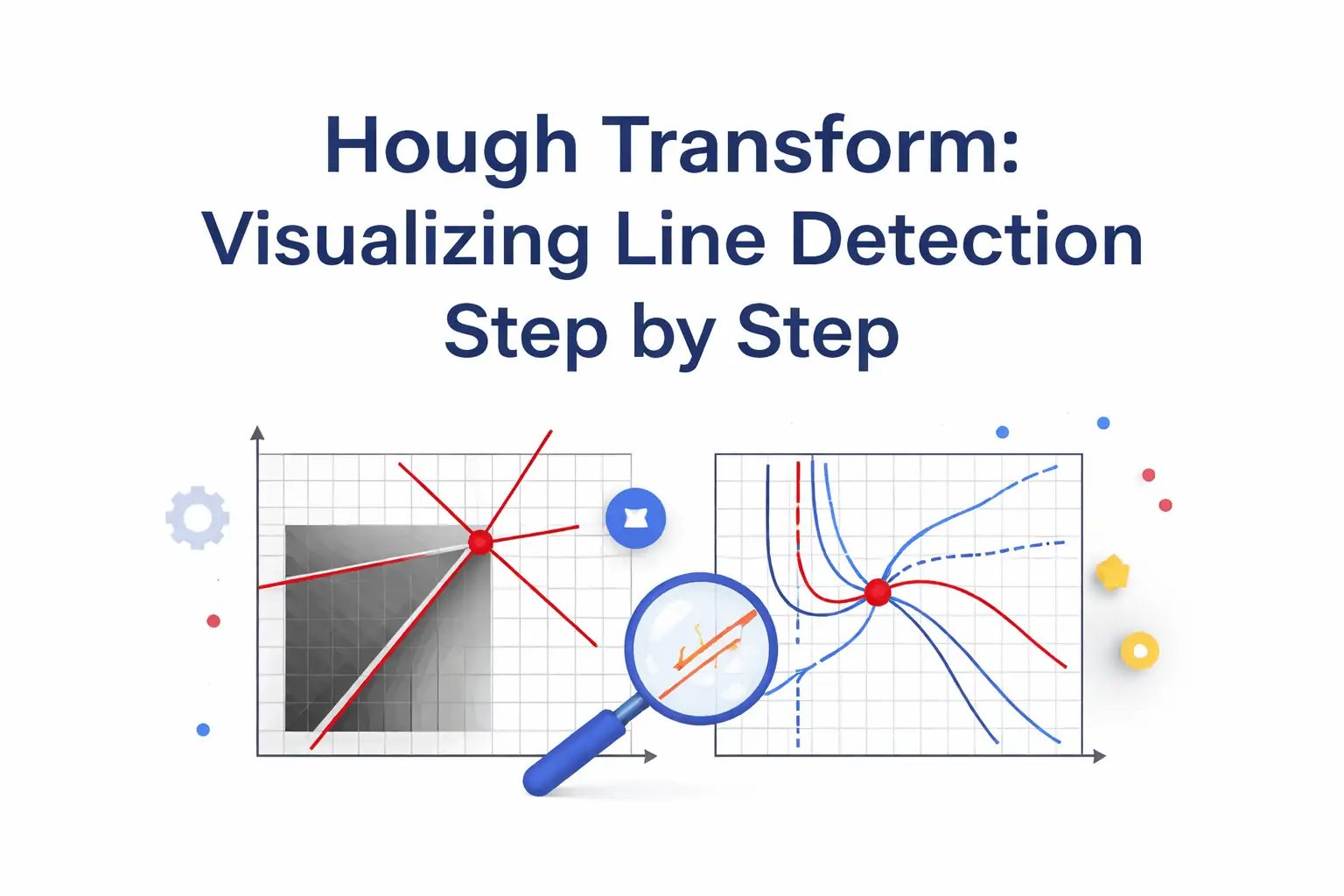
Learn the Hough Transform with our interactive simulator. Understand how edge points vote in parameter space to detect lines in images.
Learn image pyramids with our interactive simulator. Understand Gaussian and Laplacian pyramids for multi-scale image processing and seamless blending.
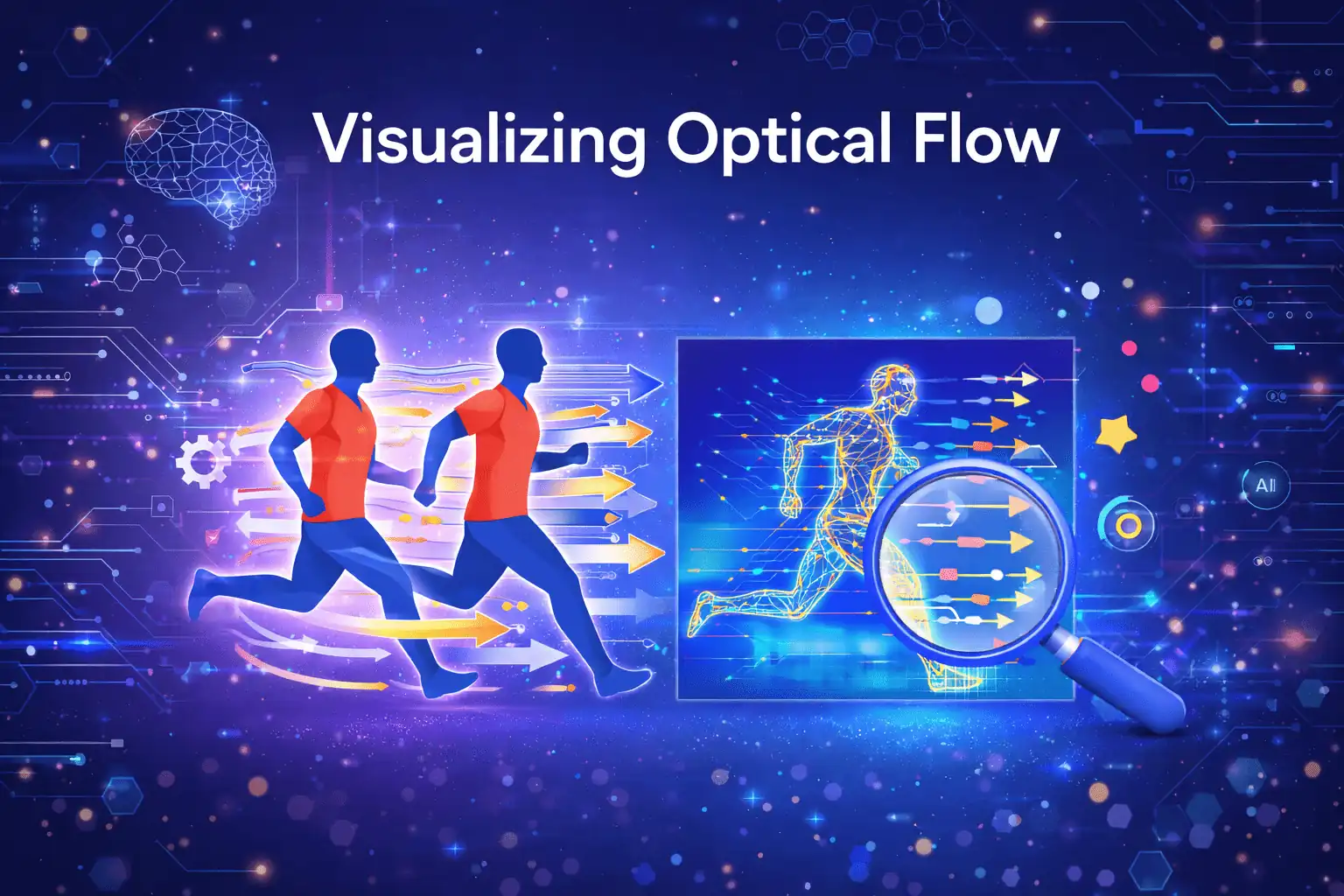
Learn optical flow with our interactive simulator. Understand Lucas-Kanade and Horn-Schunck methods for motion estimation in computer vision.